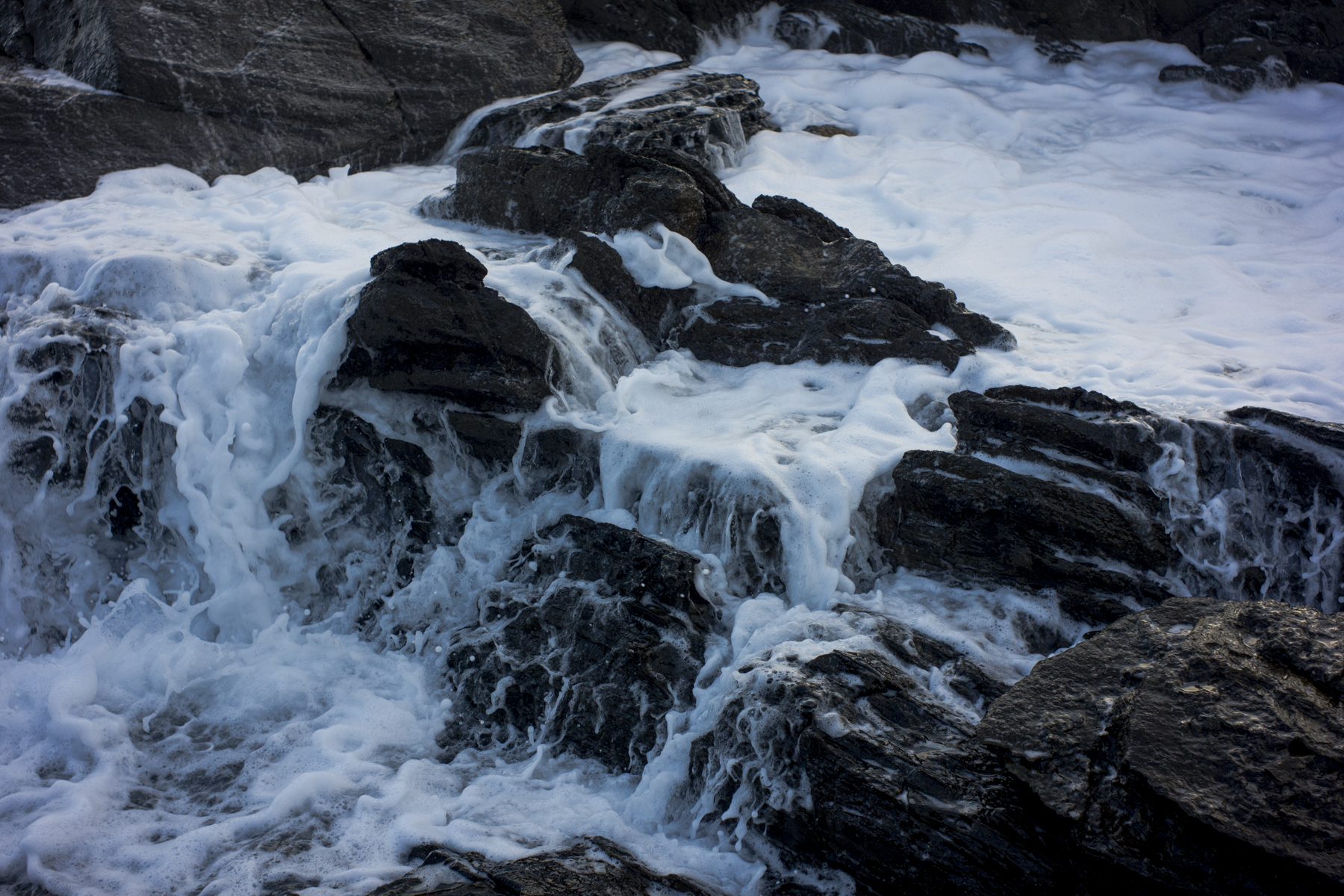

low light photography

I haven’t done night photography up to now. Judging from Flickr nocturnal photography is very popular and I admire the work of those who photograph at night.

last stand

Objects and scenes look very different at night and in the early morning before dawn. What often looks drab and grey during the day in winter frequently comes alive at night. They are much more atmospheric.And more interesting.

fuzzy imagery

Normally my photography is within the crisp focus big depth of field tradition and I usually avoid the out of focus smudgy lens look. This image happened because a wave crashed over the top of me whilst I was photography a rock, drenching me in the process.

I pulled the camera away but it still got wet the camera in the process.The tide was high and the seas were big that day.

flowing water

Though I dried the camera body and the lens,the latter was still rather smudgy when I was taking some shots of flowing water. That kind of picture is the result. It’s a poetic approach to photography that emphasises subjectivity.

from a car park roof

I continued my search for suitable high locations to use the 5×7 Cambo in the Adelaide CBD today. This was mostly spent checking out the highest floor of the car parks in my neighbourhood for their perspective on the city.

I also wanted to see whether I could get a lens through the grilled barriers around the car parks that have been erected to prevent people from jumping off the roof.

King William Street

Most of the perspectives that I came across were far too scenic—the snaps looked like picture post cards. I have no interest in pretty or pleasant representations of this provincial city as I am not doing a portrait of Adelaide; a tourist image; or a celebration of Adelaide as a liveable place.

from a tram

I got tired of the rigors of urban large format photography after a fruitless day hunting for new locations. So I jumped a tram, found myself a window seat, then snapped away through the window as the tram moved through the city.

Monday afternoon

It was liberating. Many of the pictures were no good in terms of composition but others indicated the possibilities of this way of taking photography. I had tried this approach in Canberra on a bus, and in Melbourne on a bus and train but they never really worked. It was hit and miss.

time

One of the themes that I unconsciously explore in my local neighbourhood is urban nature. Not so much the cultivated nature that is the result of gardening by city councils (shade tree plantings, revegetation projects etc) or individual’s gardens but wild nature.

time

Wild nature in the sense of weeds growing up through the concrete, or brick walls, creeper reclaiming walls–the urban nature that no one really notices. Or they want to eradicate it when they do notice.

strolling the city

I’ve started walking around the urban neighbourhood that I live in–the south east corner of Adelaide–with a photo eye. It is a digging behind the surface of the functional drudgery of inner city life–what the situationists called dérive: a stroll through the city that includes and interpretive reading of the city, an architectural understanding

units, Vinrace St, Adelaide

Another way to look at the city is in terms of repressed desires–eg., the poverty and alienation of the conditions of everyday life despite the plenty of commodities and the glossy consumer lifestyle on the billboards.

winter

I’m down at Victor Harbor for a couple of days having some photovoltaic solar panels placed on the roof of the weekender. As I had to hang around the house for the tradies I was only able to manage a walk along the cliff tops and beach early this afternoon with the dogs.

seascape, Victor Harbor
.

It is winter. Even though the rain had stopped, there was a bitterly cold wind blowing in from the south west and the sea was turbulent. Even so, there were lots of people walking their dogs, or strolling along the cliff tops, and even exploring the little beaches.

I wish that I had used the time to try to include people in the landscape, but my mind was on the tradies and solar panels not photography. The solar panel job would not be finished today. It’s a big job. So habit took over.

photographing the urban environment

I have been plugging taking photos of my local urban neighbourhood without giving much thought to what I’m doing apart from thinking that it is something to do with architecture.

I was kinda doing architectural photography intuitively I told myself, but when I actually came to consciously do architectural photography the results, more often than not, were disastrous.

detail, Federal Court building

Then I stumbled upon the newly formed Urban Photo Magazine group on Flickr and I could see people doing similar work to me.

returning to digital

I’m so annoyed with the pro-lab processing of my 5×4 film negatives that I had taken in Tasmania–some of them have very matted skies that I cannot correct using Adobe Lightroom. All that bloody expense in getting the gear to Tasmania and then the film and processing. It hurts, big time.

Those with no sky–ie., detail—were okay, and they delivered the detail I wanted.

So I have switched to digital for the moment, while I lick my wounds. Though I’ve gone back to exploring large format possibilities in the Port Adelaide project, I am very hesitant to shoot urbanscapes with skies in large format after being burned by the results of the Tasmanian work.

stobie Pole, Port Adelaide

I’ve kinda lost my confidence with large format, as it is proving much more difficult to pull off than I’d imagined. It’s less a simple step up from medium format than a big leap, and I’ve lost my footing in making the leap.