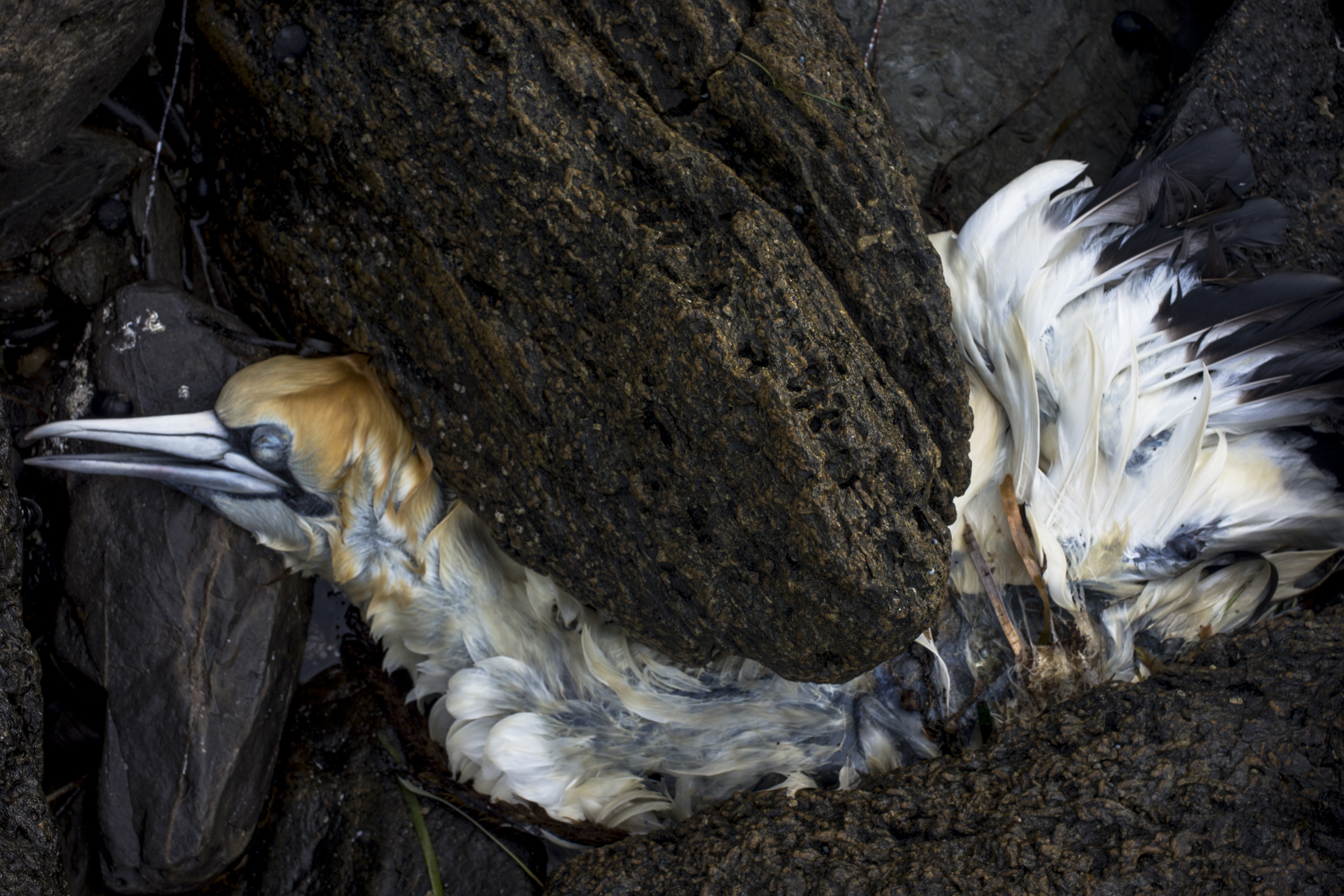
at the foot of the cliffs of Newland Heads

Whilst Suzanne is in Barcelona revelling in the delights of a delightful international city Ari and I are at Victor Harbor this weekend.

I’ve come down to scan some of the medium format negatives from the Queenstown Tasmania shoot. There has been lots of rain at Victor since we were here last, and though the weather today was cool and overcast, it was very still. So went for a poodlewalk beyond Kings Head around to the inlet at the edge of the cliffs that form Newlands Head. There were lots of people around— cray fishermen and Heysen Trail walkers. There were no seals cruising the shoreline this time.

We returned to the area when we were down at Victor Harbor last My memories are of shots that I had taken back in late summer on one of those rare muggy overcast days in Victor Harbor. I’d shot in both colour and black and white then, and in looking at the scanned images now, I noted that the highlights were blown out and the shadows had no detail.

rockface, Kings Head

Today was the same approach–I exposed both colour and black and white whilst Ari stood guard. The cray fishermen had friends in camera clubs and talked about thenm doing a study of textures. Was I doing the same?

Unfortunately, this time, in returning to my base, I slipped on the seaweed and, though I managed to save the Rolleiflex SL66, light meter and film back from crashing into the rocks, I landed on my knees, scrapped my skin on the rocks, and twisted my left knee.

returning to Wirranendi Park

Ari and I returned to a familiar haunt on yesterday’s afternoon walk—the West Terrace Cemetery and the Wirranendi Park section of the of Adelaide’s parklands. The rain had eased, it was overcast, and the sunlight was soft.

We had initially gone to the western parklands to see if a transitory aboriginal camp was still standing. I’d taken some photos before going on the Tasmanian trip but, as the early morning light was now quite different, I wanted to see what had happened whilst we’d been away. I was thinking of re-shooting the camp with more of the scrub.

transitory camp, western parklands Adelaide
transitory aboriginal camp, western Adelaide Parklands

The camp had gone–been dismantled by the Adelaide City Council no doubt. None last long. So we walked through the West Terrace Cemetery looking for picture possibilities then through the Wirranendi section of the parklands.

a walk but no photography

Ari and I went on a photowalk early this morning along the Heysen Trail past Kings Head to an outcrop of rock just west of the Kings Beach Retreat. I’d photographed there around there earlier this year. With Agtet gone Ari is depressed and lacking in energy and motivation.

But he did pick up yesterday afternoon when we visited Kings Beach. Hence the decision to do a longer walk this morning; one that would take us closer to the eastern boundary of the Newland Head Conservation Park.

rock detail, Kings Head.

As it was overcast, I carried the medium format camera gear and tripod. My new digital camera–a Sony Nex-7— has yet to arrive in Adelaide. The conditions were hopeless for photography: strong south westerly winds, pounding seas, floating waves of sea spray drifting across the ricks and sea foam swirling through the air. The seals didn’t seem to mind the turbulent conditions though.

under the Monash Freeway

Whilst we were in Melbourne waiting to see if Atget would recover from his operation I spent an afternoon on a photowalk with Stuart Murdoch along Gardiners Creek near, and under, the Monash Freeway.

Gardiners Creek, East Hawthorne.

We walked along a small section of Gardners Creek and the first stop was this old Toorak Rd bridge where the creek became more or less a drain, rather than a creek. It was what is called heavily urbanised. The creek has been degraded in much the same way as many of the other Melbourne eastern suburban waterways.

on the Nepean Highway

The last poodlewalk in Melbourne was done by car. On my previous visits to Melbourne I’d seen some architecture on the Nepean Highway that caught my eye, whilst I travelling on the Frankston train to the CBD. So we–Suzanne, Ari and myself— cruised the Nepean Highway from Frankston to Mordiallic looking for “Custom Framing” and a big bold blue building.

Nepean Highway, Melbourne

It was the day that we had Agtet, our grey standard poodle, put down. We were to drive back to Adelaide early the next morning, and we had heavy hearts and time on our hands. A phototrip in the car was my way of filling in the afternoon. Suzanne drove the car whilst I looked out for the building.

at Evandale, Tasmania

The last poodlewalk I did with both Agtet and Ari was at Evandale in the northern Midlands. The walk was along the banks of the South Esk River the night before we left Tasmania.

We were to drive to Devonport early the following morning to catch the ferry across Bass Strait to Melbourne, stay overnight in Geelong, then drive to Adelaide the next day.

near the South Esk River

It was a lovely walk in the late afternoon sun. It was very peaceful and gentle. The river flowed gently, people were fishing, others, like me, were walking their dogs. A farmer was cutting down the willows along the river bank and the occasional plane flew overhead bound for Melbourne.

Agtet: in memoriam

Our poodlewalks will probably be very different from now on, given what has happened to Agtet at the very end of our Tasmanian trip.

Agtet had a serious accident arising from stomach bloat and he will propably not recover. He has been recovering from the surgery but, as he also suffered from cardiac arrest just after the surgery, his neurological functionality was impaired. Unfortunately, the neurological improvement has been extremely slow.

This picture was taken on location in Zeehan, an old mining town on the west coast of Tasmania:

Agtet’s stomach had twisted 360 degrees after we arrived in Geelong from Tasmania on the ferry last Monday–the 2nd of April. He has been at the Vet hospital in Werribee since then, and his recovery during that week has been small step by painful step. We have been staying with my sister at Safety Beach on Melbourne’s Mornington Peninsula during that time.

on Bruny Island

After the residency finished at LARQ in Queenstown we travelled across to Tunbridge in the Midlands for the night with Barb and Mal. I had a little time in the late afternoon to briefly scope for a 5×4 afternoon picture of the salt lake.

saltlake, Tunbridge

Then we travelled to Bruny Island for a couple of days holiday. Whilst the others did some bush walking in the South Bruny Island National Park I explored the sandstone cliffs at the edge of Adventure Bay.

at the Mt Lyell mine again

The rains eventually eased in Queenstown and I was able to access the top of the open cut Lyell mine early Sunday morning. There were the usual showers and mist but these cleared and I was able to get some 5×4 pictures before the cloud cover disappeared.

Lyell open cut mine

I’ve decided to return to Queenstown in mid-May and take part in the Queenstown library’s re-photography project. It is the only way that I will be able to gain official access to photograph the open cut with the 5×4 Linhof as the mine is closed to the public apart from the 2 hour tour of the disused open cut mine.

Queenstown re-photography project

The Queenstown Library has initiated a ‘then and now’ photographic project in relation to the 1912 Mt Lyell Mining disaster. It emphasizes both community involvement and re-photographing some of the photos of the open cut mine taken by the early twentieth century photographers.

Queenstown, Tasmania

I had a go at finding the sites used by Frank Hurley for his photographs of the Queenstown landscape and Mt Lyell mine out of interest. But I was way out. I just don’t know the area. Only a local with a keen topographical eye and a knowledge of the access roads could find the old sites now in order to show some continuity between the old and new images.