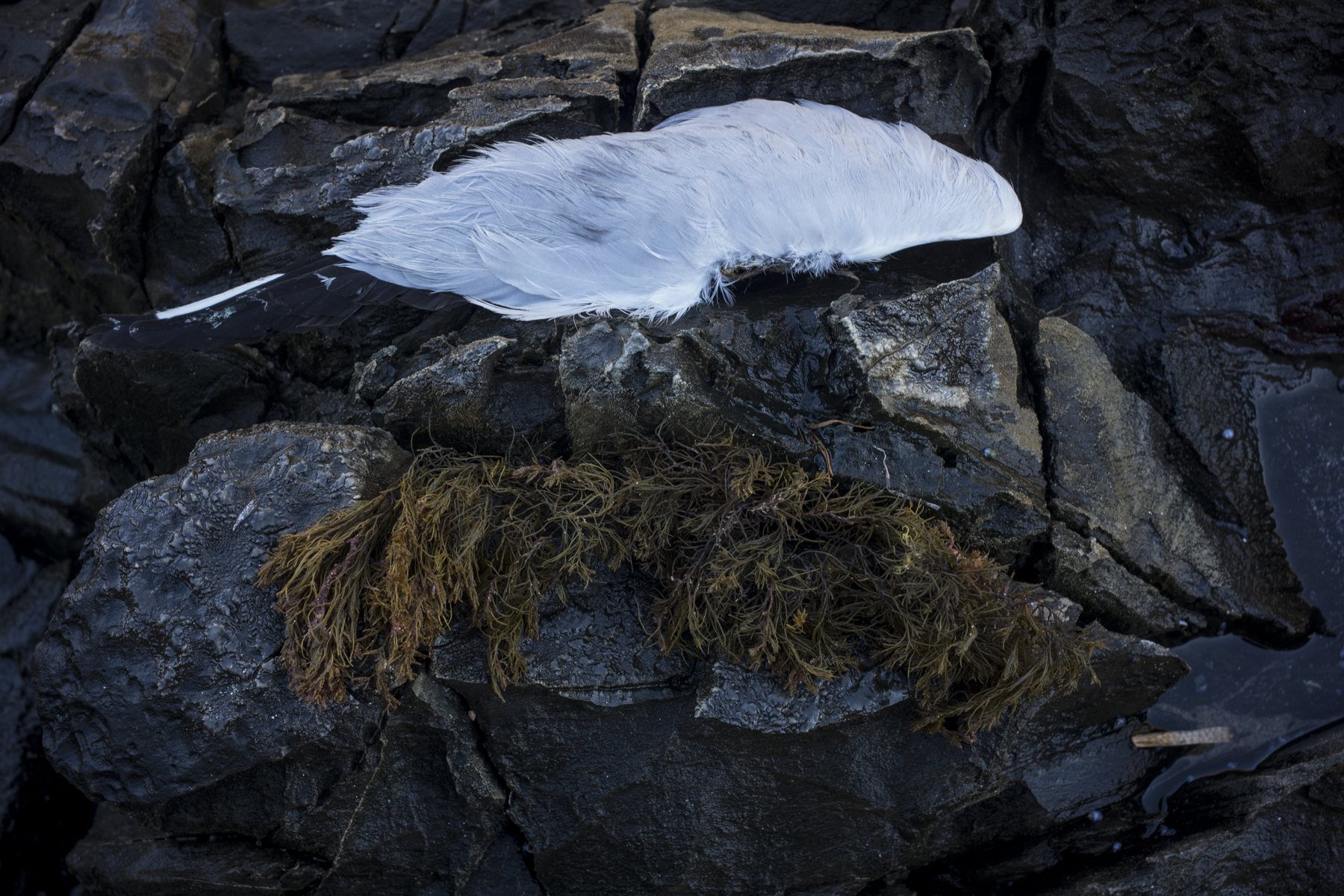

at Goolwa Beach

Yesterday’s afternoon poodle walk was from the River Murray near Beacon 19 to Goolwa Beach along the Sir Richard Peninsula near the mouth of the Murray River and back again. I was looking for material whilst walking to and from the beach to build on the Edgelands project for a book, but there was little that was of interest.

The beach has been given over to 4 wheel drives—they more or less treated it as a roadway to cruise up and down. Presumably, this is what the 4 wheel drive crowd see as having fun.

Goolwa Beach
Goolwa Beach

It wasn’t all that pleasant walking along the beach with the 4 wheel drives whizzing past. It would have been great to have walked to the mouth of the Murray River, or to explore the sand patterns on the beach. This is very close to the very distinctive and vulnerable Coorong National Park.
Continue reading “at Goolwa Beach”

a deserted city

Ari and I wandered around the CBD of Adelaide on Sunday morning after returning from a few days holiday in Victor Harbor. We returned to Adelaide in order  to continue cleaning and painting the townhouse before it goes on the market in mid-January.

It was an eerie experience.  We were the only ones walking the city.

Bentham St
Bentham St

Then I realized that a CBD devoid of people was the Adelaide that I knew whilst I lived in the CBD. It is only in the last couple of years that Adelaide has changed in the sense that people now walk the streets. The CBD is no longer just a space for work and shopping since people–mostly young people– have started living in the city and spending their time on the street. Continue reading “a deserted city”

coming to an end

The days of living and walking in the CBD of Adelaide are coming to a close. The poodlewalk with Ari last Saturday morning will be one of the last as the townhouse is due to go on the market in mid-January.When it is sold–as we hope–then that will be the end of us living in the CBD.

Ibis Hotel
Ibis Hotel

We now live in the townhouse in order to scrub it up–clean it and paint it –for sale. The cameras, computers and scanners are now at Victor Harbor, which is the southern outer suburban rim of Adelaide. We are about one and half hours travelling time by car from the CBD. The car, rather than walking, will now be our primary mode of transport. There is no public transport from the CBD to the outer suburban coastal rim. Nor will there be.
Continue reading “coming to an end”

making cities liveable

Walking around Adelaide’s CBD with Ari has enabled me to see that  urban design in Adelaide, since the 1960s,   has been structured around keep the car happy.

Its been about suburban sprawl, traffic efficiency and parking spaces rather than public spaces for people to gather. The assumed model of urban design is the old modernist one— modern cities are about high-rises and good windy spaces rather than being about the human lives lived within the city.

Rowlands apartments
Rowlands apartments

It was only liveable because it was small or compact and so avoided the congestion of Sydney. The recent shift is towards densifying  Adelaide  around the core infrastructure, transport hubs and a diversity of income groups in the CBD. Continue reading “making cities liveable”

slowness

If cities are now seen as ‘engines for innovation and growth’, then the smart city paradigm is seen to involve the application of information and communication technology, environmental sensors, digital footprints of the inhabitants, manipulation of the resulting data using statistical techniques, and finally the use of complexity modelling and advanced visualisation in order to make sense of it all.

These assemblages aim to promote efficiency, productivity, and safety and to reduce uncertainty in the management of places. Smart city initiatives have been closely linked to the forms of accelerated living that increasingly dominate everyday life in the global metropolitan era. Smart cities are fast cities, efficient cities, controlled cities.

Currie St
Currie St

Poodlewalks are about slowness in a city increasingly dominated by speed and movement, acceleration and flow–wandering into car parks and observing the light on the built environment. Slowness stands for slowing down–for deceleration, detour, delay, interruption, inertia, stoppage and immobility. It stands for decelerated living in the context of the embrace and internalization of a culture of speed and hypermobility (of people, data, goods, capital, etc).

the big shift

The shift to living at Victor Harbor has started after our  return from the Edgeland exhibition in Canberra.

The things in the townhouse in Adelaide are slowly being decluttered, we are tarting the place up, the painters come in on Monday, and the carpet layers the following week. My photography equipment, the books and the digital suite are being driven down to Encounter Studio at Victor Harbor early tomorrow morning. The poodle walks will be mostly along the cost of the southern Fleurieu Peninsula coast from now on.

quartz + granite
quartz + granite

We have been living in the townhouse in the CBD of Adelaide and travelling to Victor Harbor every second weekend for about 15 years. The townhouse will be sold early 2015. This is a major shift. In the future we will be visiting Adelaide on a day trip.

in Canberra

We stayed at Banks in Canberra during the opening of the Edgelands exhibition at Manning Clark House.

Banks is on the eastern edge of this car-based, suburban city and is in the Tuggeranong district/valley. Banks is on the edge of Canberra’s outer suburban fringe. Our poodle walks in the morning and evening were along firebreak trails on both sides of the valley. We found the walks to be thoroughly enjoyable and attractive.

Banks, ACT
Banks, ACT

But you need a car to get around Canberra as the public transport to the city is woeful. It’s a long drive to school, work, shops, doctors, or leisure centres. Since the dominant mode of transport is by car, there is congestion in and around the CBD in spite of all the transport planning to ensure the flowing movement of the car.

at Hay, NSW

On our way to and from Canberra to attend the opening of my Edgelands exhibition at Manning Clark House we stayed at Hay, which is about halfway between Adelaide and Canberra. The poodle walks in both the morning and evening were along the river trail on the banks of the Murrumbidge River.

Murrumbidgee River
Murrumbidgee River

The Murrumbidgee is the second largest river in the Murray–Darling Basin and this 1,600 km long river is ranked as one of the two least ecologically healthy of 23 tributary rivers in the Basin. It looked dead to me. Yet the Basin Plan will do absolutely nothing to restore the environment of the upper Murrumbidgee.

avoiding grass seeds

Late spring in Adelaide means heaps of grass seeds everywhere in the parklands and they grass seeds attach themselves to the poodles’ legs and ears and if not picked up they enter the body. So we have to avoid any grass seed areas.

That leaves us with the beach, lawns and the West Terrace Cemetery.

West Terrace Cemetery

The afternoon walks are in the West Terrace Cemetery, the pre-breakfast walk is the old Victoria Park racecourse, the post-breakfast walk is the grassy strip behind Veale Gardens, and the lunch time walks is the Gouger St restaurant strip.

spring time on the coast

The weather on the southern Fleurieu Peninsula coast during Spring is turbulent. There are days of strong south easterly winds, hot days with a strong northwesterly wind, broken by cold southerly winds with a plunge in temperature. Generally its blustery with a few calm days. This year there has been very little rain.

The landscape is becoming drier. I would hate to have to exist on rainwater tank given the predictions for much less rain for southern Australia.

Ari + Maleko
Ari + Maleko

Often the light during spring can be quite eerie.