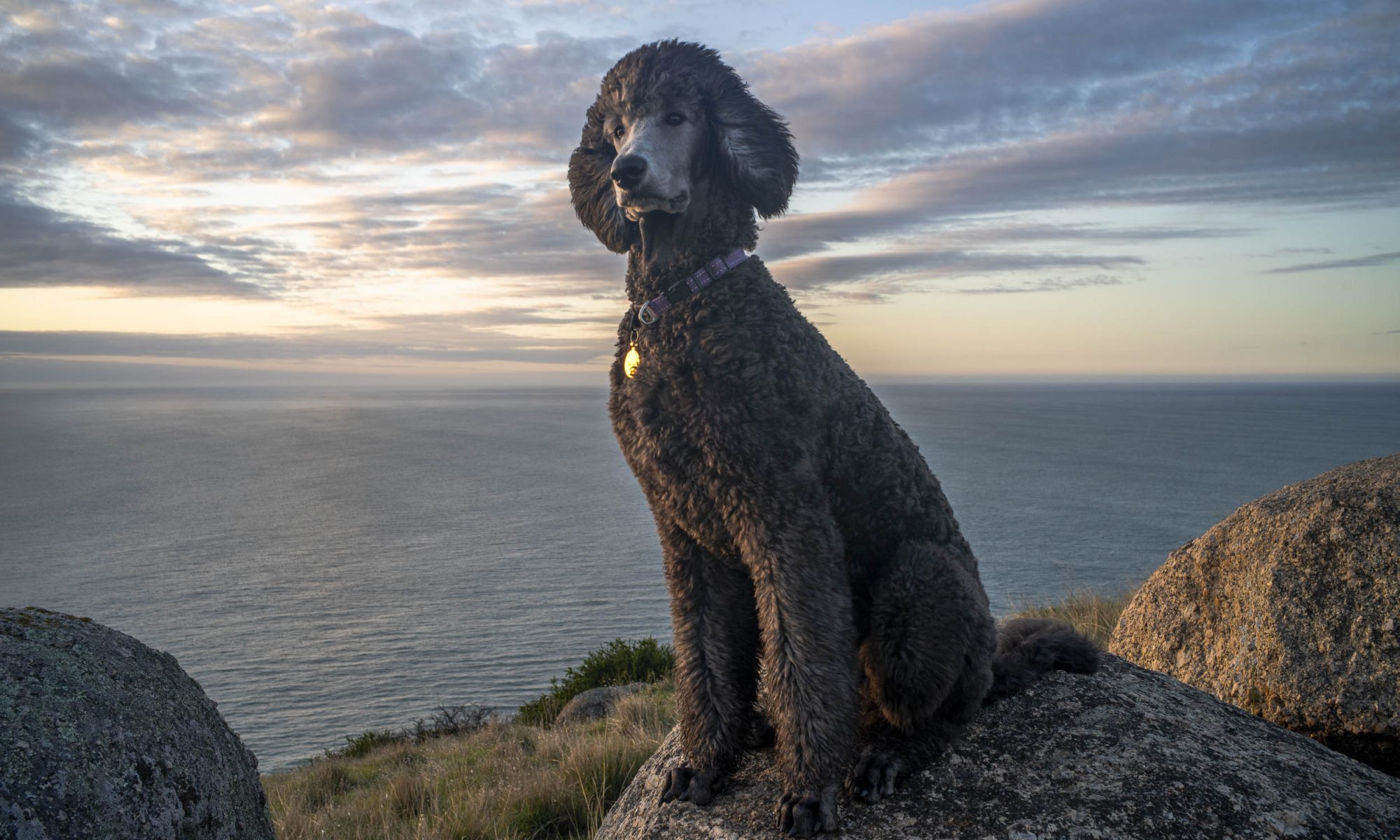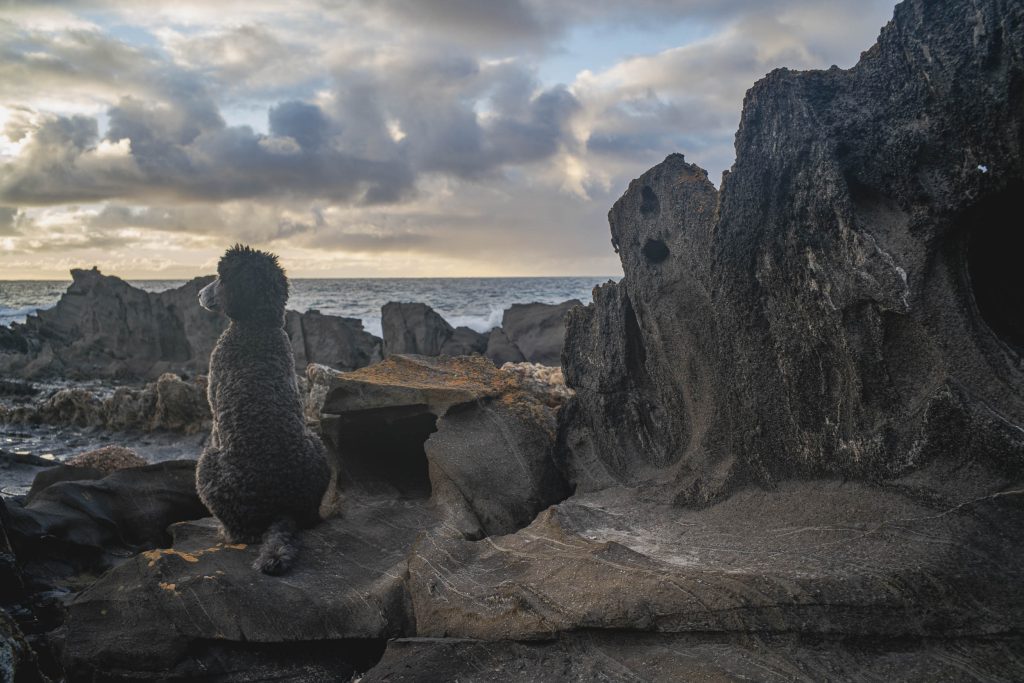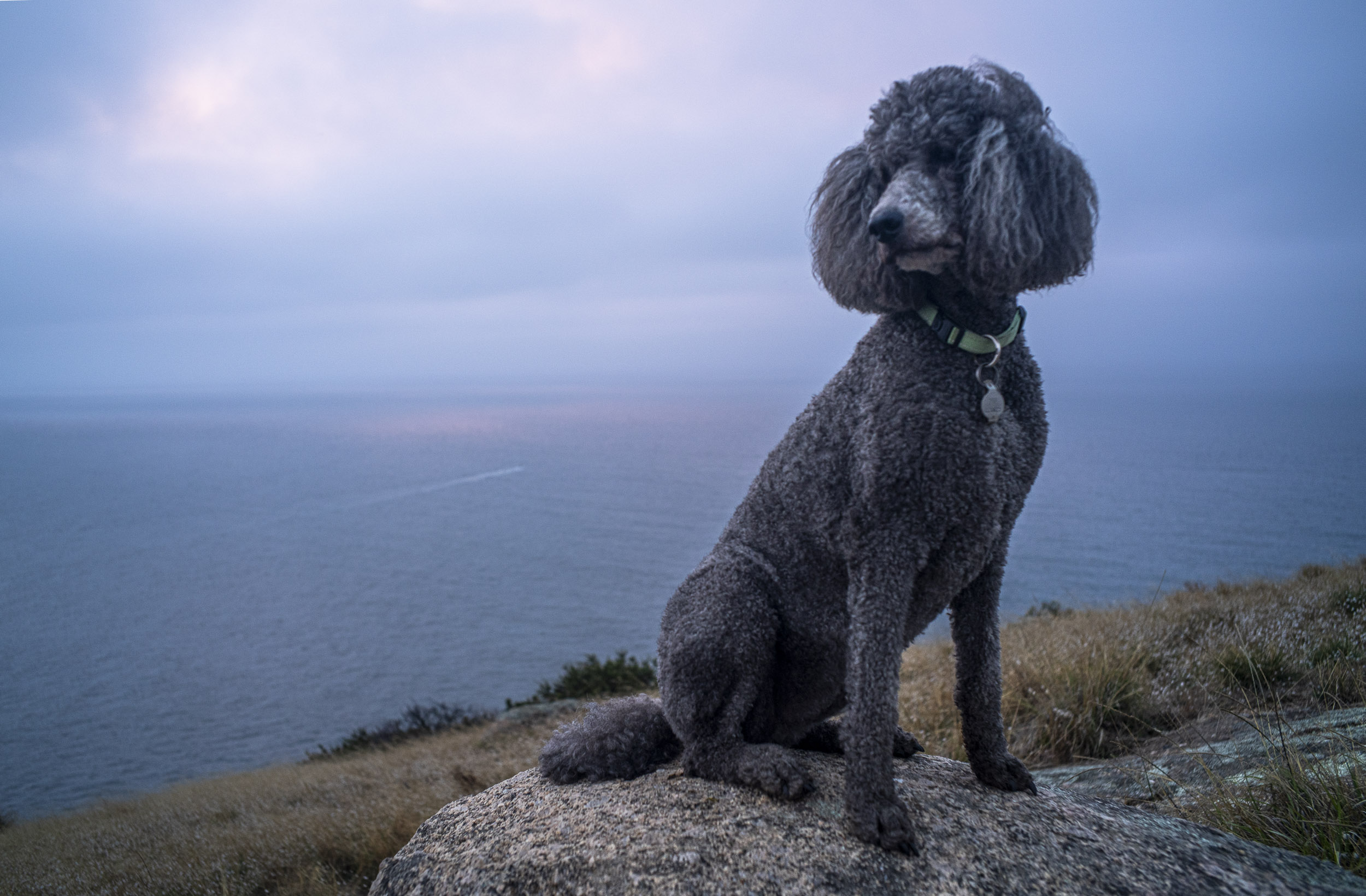

Kalani: in memoriam

We — Suzanne, Maya and I– scattered Kalani’s ashes around his favourite spot in the Waitpinga bushland this morning. It was around 6.30am and cool so we were able to avoid the very active and extremely venomous Eastern Brown snakes.

The eastern brown (Pseudonaja textilis) is responsible for the most snakebite fatalities in Australia, due to its potent venom causing paralysis and severe blood clotting issues (coagulopathy), leading to rapid collapse without prompt antivenom and medical care.

Kalani died 2 weeks ago from being poisoned after eating a dead fish contaminated with the toxic micro alga bloom . It happened whilst we were on an early morning poodlewalk along the local beach at Victor Harbor.

Sony A7 R111
Kalani’s ashes

He started vomiting a few hours latter, and though we were able to get him to the vet that morning, he died in the early afternoon. It was all so sudden. We have no knowledge of what kind of poison killed him so quickly.

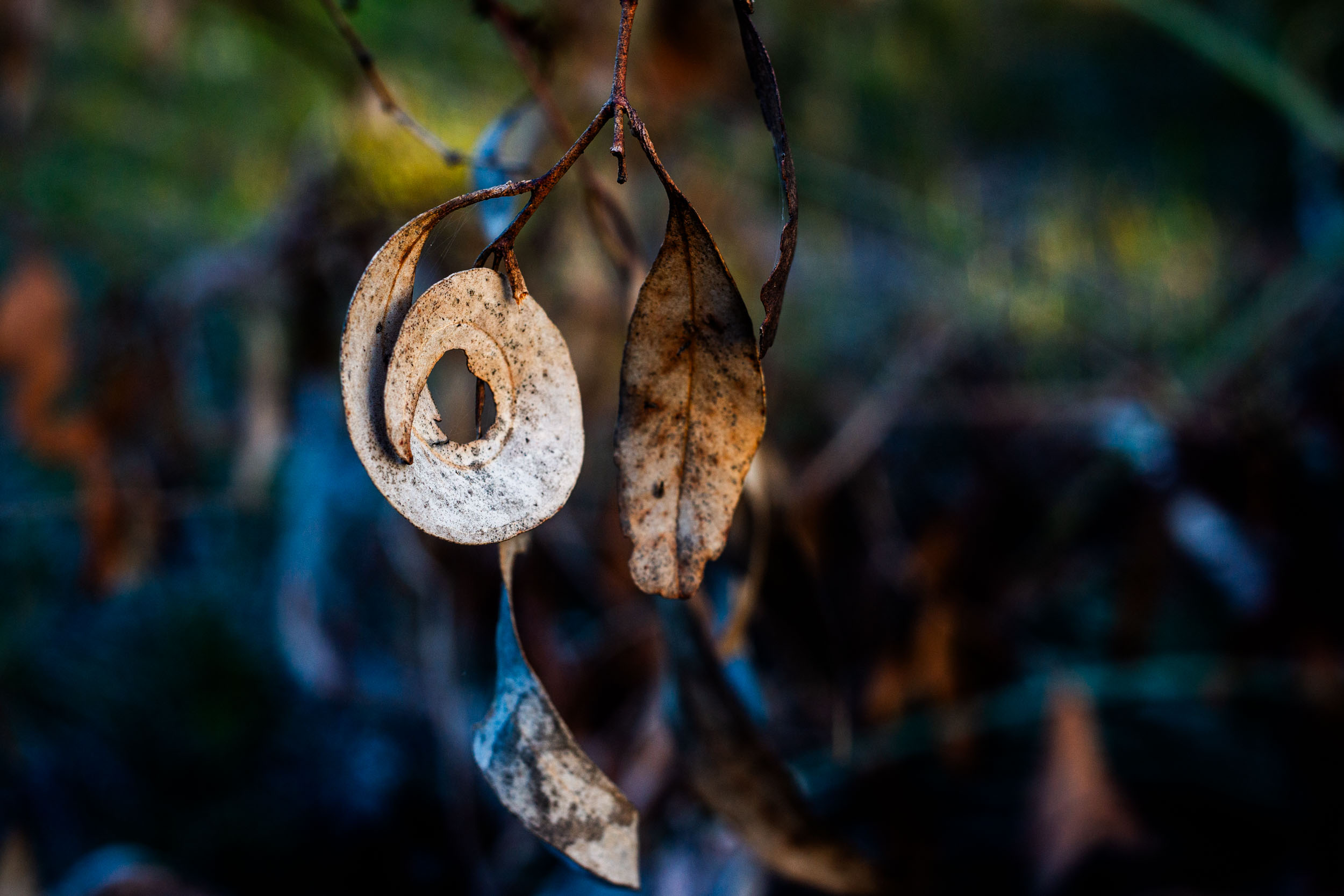
bushland studies #2: mono no aware

The traditional or pre-modern Japanese aesthetic category of mono no aware generally refers to impermanence of things. It is often interpreted as the ‘pathos of things’–“pathos” (aware) of “things” (mono), deriving from their transience.

What could be more transient than leaves in the local bushland?

This aesthetic category centers on the acceptance of transience and imperfection and it is very appropriate for the flux of nature in the local bushland that we walk in. Mono no aware involves an understanding that transience is a natural phenomenon independently of our relationship with what has disappeared.

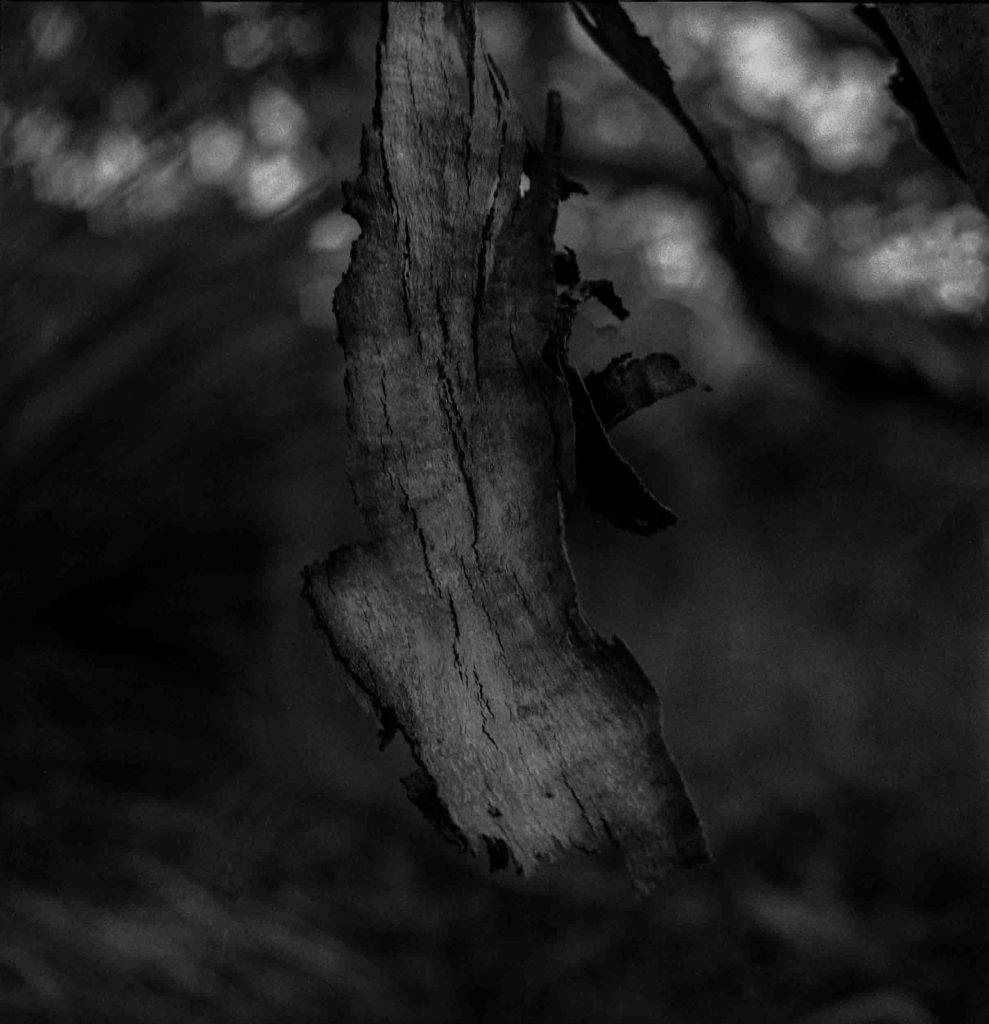
bushland studies: the indistinct (“In’ei”)

This companion post to the previous bushland studies one is concerned with exploring the pre-modern Japanese aesthetic category of the indistinct (In’ei) in an Australian context.

“In’ei” refers to the state of dimness or shadow created when direct light is blocked, but it does not mean complete darkness. Rather, it is a state of faint dimness where the presence of light can be felt. Many of these aesthetic categories belonged to Japanese high culture and the aristocratic class .

in contrast, Jun’ichiro Tanizaki In Praise of Shadows (1934) argued that “In’ei” is rooted in everyday life as its ground is its the Japanese people traditionally living under these heavy roofs of thatch or tile, and spending much of their lives in the heavy darkness that hangs beneath the eaves. Tanizaki says that Japanese people traditionally lived under these heavy roofs of thatch or tile, and spending much of their lives in the heavy darkness that hangs beneath the eaves.

Hiatus

Sony A7 111

It has been about five months since the last post on poodlewalks. Some explanation for the hiatus is mentioned here on The Littoral Zone. Posting on this website was also on the backburner due to the trip to Japan, which took place shortly after the last post in late September 2023. Roughly editing the photos that I made whilst in Japan pretty much preoccupied me for the rest of that year.

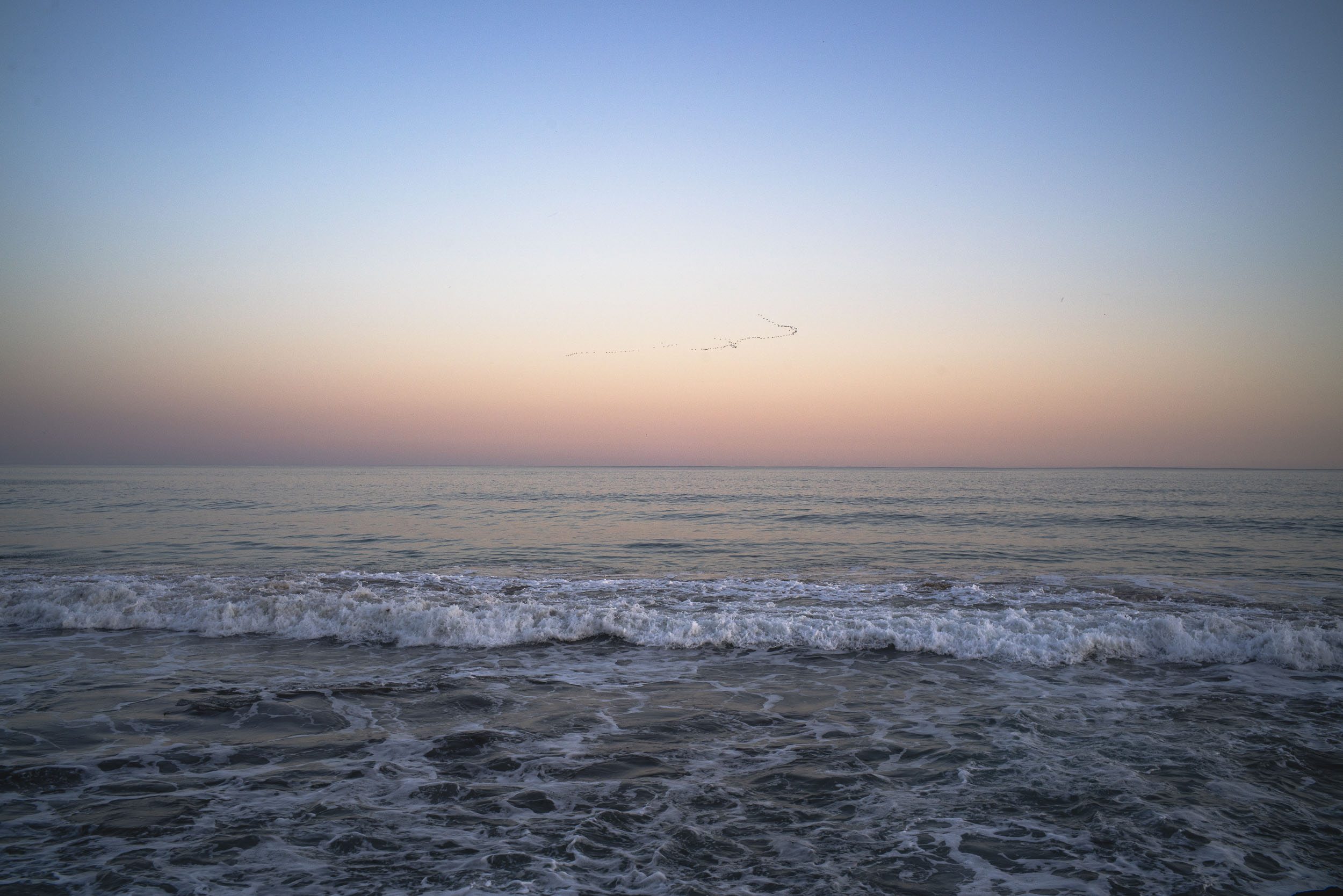
The last photos I made before I left for Japan in mid-October were those in the seascapes series on the early morning walks and in the evening ones in the magic hour.

The archive indicates that even though I was walking with the poodles and making photos in the Nov-Dec period after I’d returned from Japan, I didn’t re-connected to the next step of posting the images on the poodlewalks website.

augumenting photography whilst walking with Maya

Sony A7 R111

This update on making photos whilst walking with Maya along the coast starts to explore ways of augumenting the still photography. Large format art photography has been my way of creating an art work from these poodlewalks, which are embedded in a particular place.

Maya is now between 5-6 months old and she is quite comfortable walking for an hour or so with me along the coastal rocks on the southern Fleurieu Peninsula. As we are on the cusp of winter in South Australia there is early morning cloud cover, the showers sweeping in from the south west are more frequent, and the coastal winds are much stronger.

Whilst I’ve been on these early morning walks I thought that it would be interesting to find a way to show what Maya is hearing, smelling and seeing whilst she is with me. I have no idea how to do this, but I started wondering how Augmented Reality (AR) could add to these kind of walks; or alternatively what could be added using generative AI for texts written by ChatGPT, or an image using Midjourney.

I quickly realized that generative AI is step too far for me as is that that version of AR with its overlay of digital data on top of the real world that is consumed through a camera-and-sensor-laden headset. There is little point in the latter as few people would have the required equipment that mediates the entire world through screens placed centimeters from users’ corneas that makes the whole world a screen.

However, there is a space for something along the lines of supplementing, augmenting, adjusting, or overlaying reality; such as   supplementing the still photography is a video. A video offers sound and movement that would augment the frozen moment of the still photography. I need to do more video as I am not sure about podcasts or films, as is done with MAP‘s. Nor do I have the connections to collaborate with a writer like the SALT project which was commissioned by Art Walk Projects.

in Memoriam

We put Kayla down last Tuesday (22nd November). She was 8 years old and the ultra sound revealed that she had advanced cancer of the lymph nodes which was diffused through her body. She had stopped eating when we were in Robe several weeks ago and she hadn’t eaten for two weeks. She was losing weight and her liver had shrunken to such a degree that the vet found it was difficult to locate it on the ultrasound. Kayla was wasting away.

She was much loved and is deeply missed. This was one of the last photos that I made. It was made on our last Sunday morning Rosetta Head walk together.

Kayla, Rosetta Head

It was before we realized that she had cancer. We working on the assumption that she had an ongoing viral infection. Looking back we can see that she did did have a viral infection but the cancer had so weakened her immune system that her body couldn’t overcome it.

an 8 x 10 poodlewalk

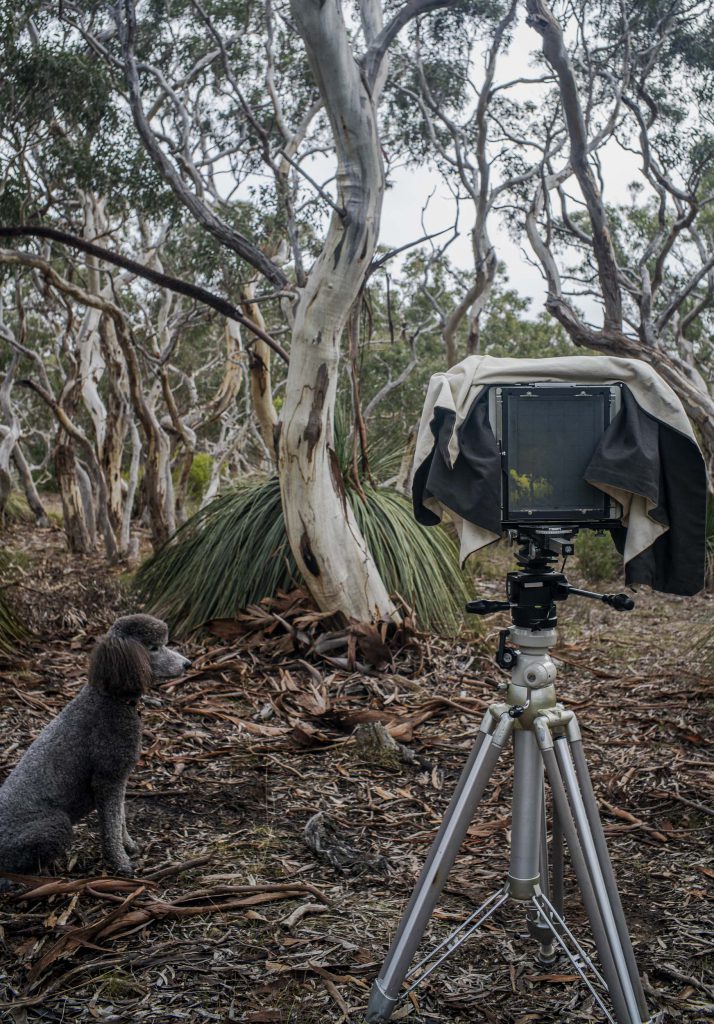
A recent afternoon poodlewalk in the local Waitpinga bushland in the southern Fleurieu Peninsula incorporated an 8×10 photo session. This session was a response to a disappointing one in the Spring Mount Conservation Park the previous day. Then I never even took the 8×10 out of the Forester. I had been hoping for misty conditions when I was driving there, only to encounter light rain when I was walking around.

Maleko + 8×10 Cambo, Waitpinga

It is more accurate to say that on the Waitpinga poodlewalk the photo session was first and the poodlewalk with Maleko came afterwards. I carried the camera equipment to the site, made the photo, returned the equipment to the Forester, then Maleko and I went on a walk through the bushland.

rain + bushland colours

I have spent many an early morning during the late summer of 2022 wandering through the local bushland with Kayla. There are lots of smells for her (eg., foxes, rabbits, kangaroos) and there are some photographic possibilities for me.

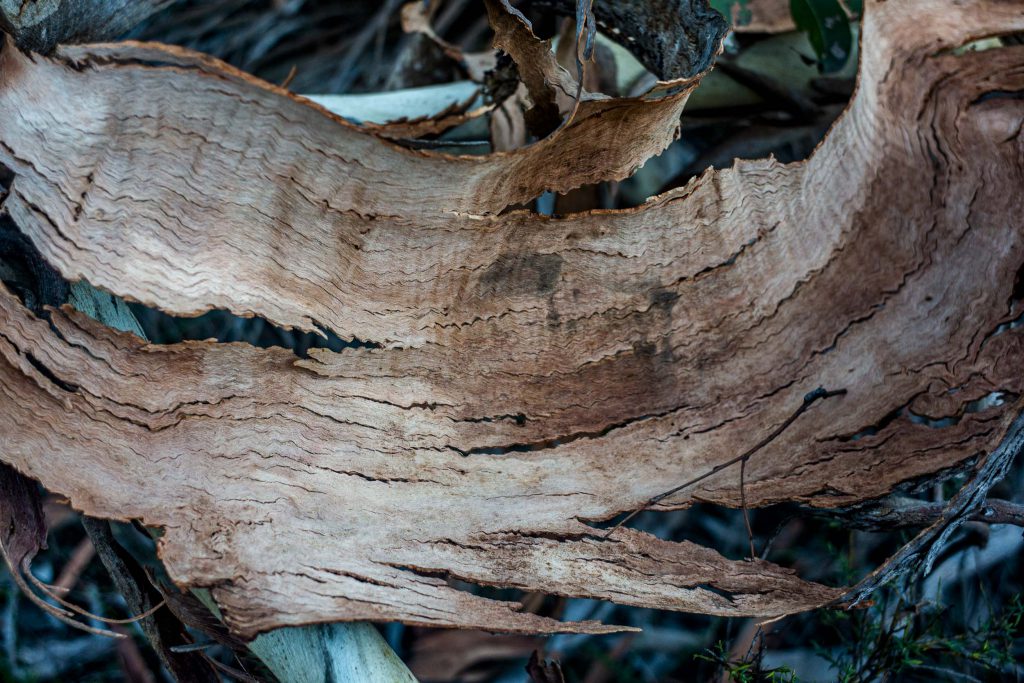
wet bark

It had been raining during the previous day, which was very unusual for summer in the Fleurieu Peninsula. This was in early January during a cool summer. Summer is normally hot and dry with no rain for 5 or so months. The rains normally start in late April.

walking, photography, philosophy

“This process of going astray, doubling back, regaining the path, sometimes gaining the perspective I was seeking and sometimes not, was exactly what it means to be on a philosopher’s walk; a walk that is open-ended, exploratory, and follows thoughts where they lead, even if that is not to a conclusion.” Bruce Baugh, Philosophers’ Walks, Routledge, 2021

For me the key word in this paragraph about walking is exploratory:– not in the sense of exploring oneself, but in taking myself out of my individual identity or subjectivity. When walking we have left behind commentary, refutation, recopying, we are no longer wrapped up books or looking at our computer screens. Walking allows myself to see the very simple, very ordinary things that exist in the space that I am walking in; and then to become immersed in that space.

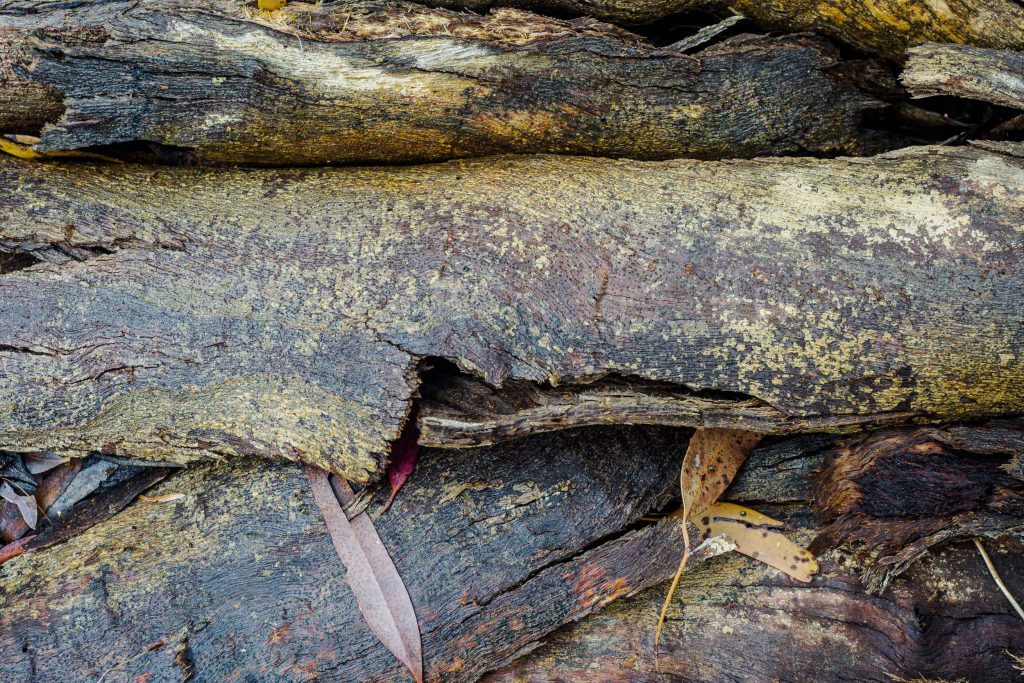
bark, bushland, Waitpinga

Walking, it is often held, is an indispensable aid to thinking and writing. I would add walking is also indispensable to photography. Walking is a point of access to the sublimely ordinary as it is through our bodies, on the move, that we make sense of our surroundings. In this view, walking offers an embodied basis for experiencing and engaging with the world.

Philosophy is connected to explorationas the marks of philosophy are reflection and heightened self-awareness. Since reflection can deepen our understanding of our ideas and motivations,  it is going to involve historical understanding of individuals in a particular place and time.

seal carcass

It is mid-spring. Daylight saving has started and the new concrete causeway to Granite Island is nearing completion. The Sculpture by the Sea park on the island has been dismantled by the Victor Harbor Council on the grounds that it was unpopular in the local community. The rains have stopped, the days are becoming warmer, there is less cloud around in the late afternoon, the light now is stronger and more contrasty. There have been no really hot days so far.

My days are more of the same: sitting in front of the iMac in the studio working on the text for The Bowden Archives and Industrial Modernity book . The Snapshot gallery and text are now looking okay, and so I have moved to concentrate working on this text for the Bowden gallery.

Whilst I have been wandering around the coast and the bush I have been watching this seal carcass slowly decay:

seal carcass

The poodles are fascinated by it–especially Maleko. They go charging ahead of me on the rocks as we head in the direction of the carcass from Kings Beach lookout. Thankfully, they do not try and eat the carcass. They just dance around it.